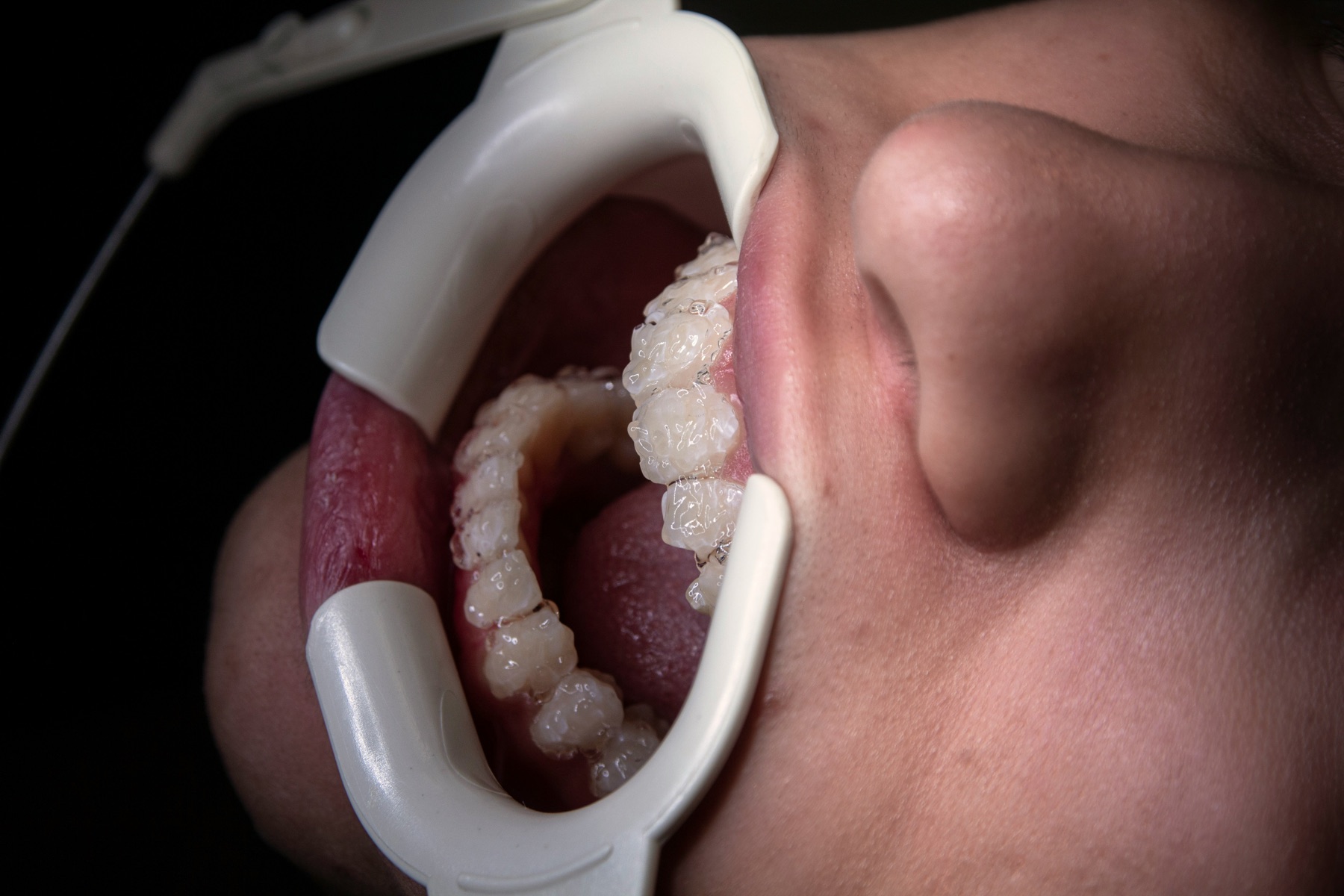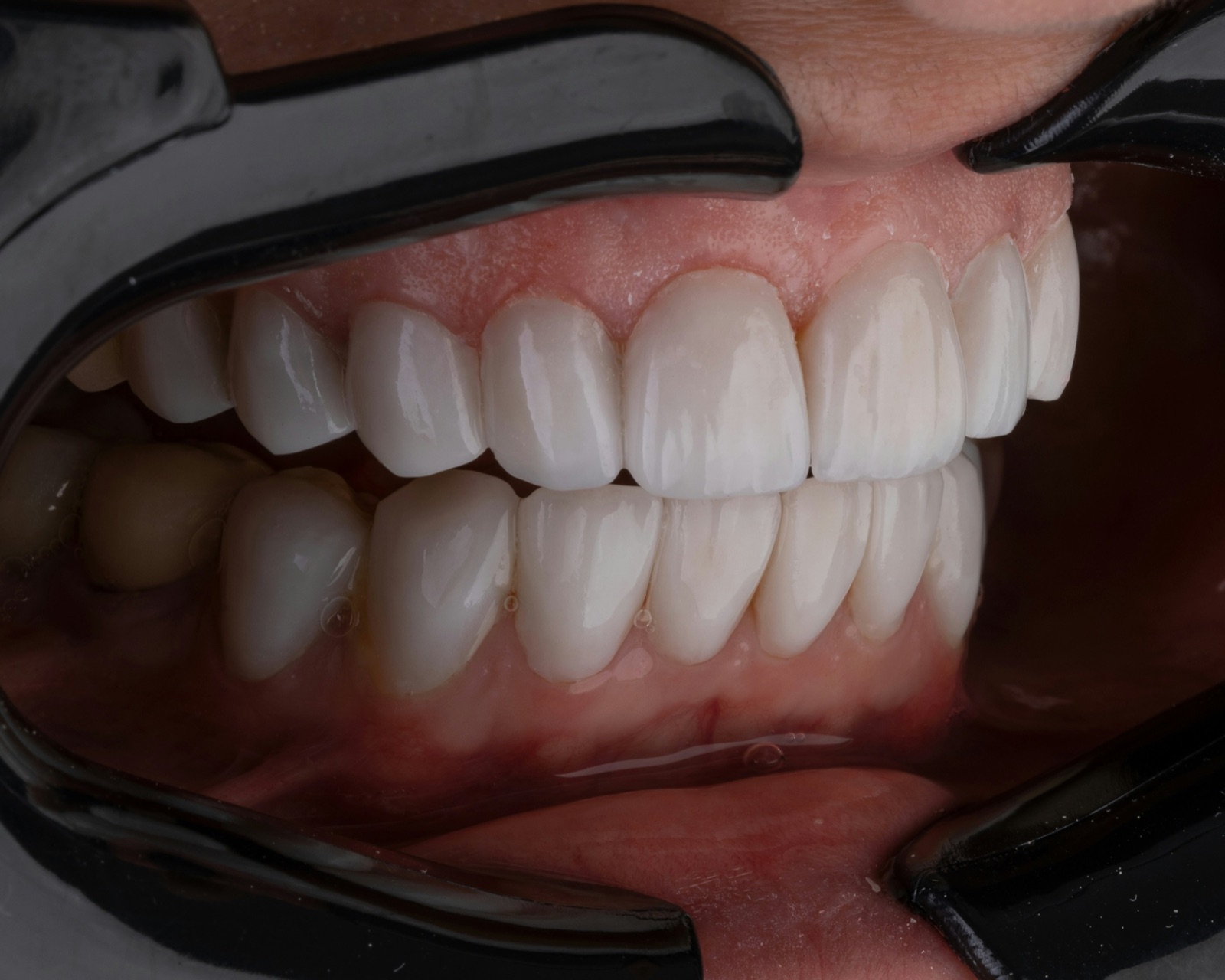
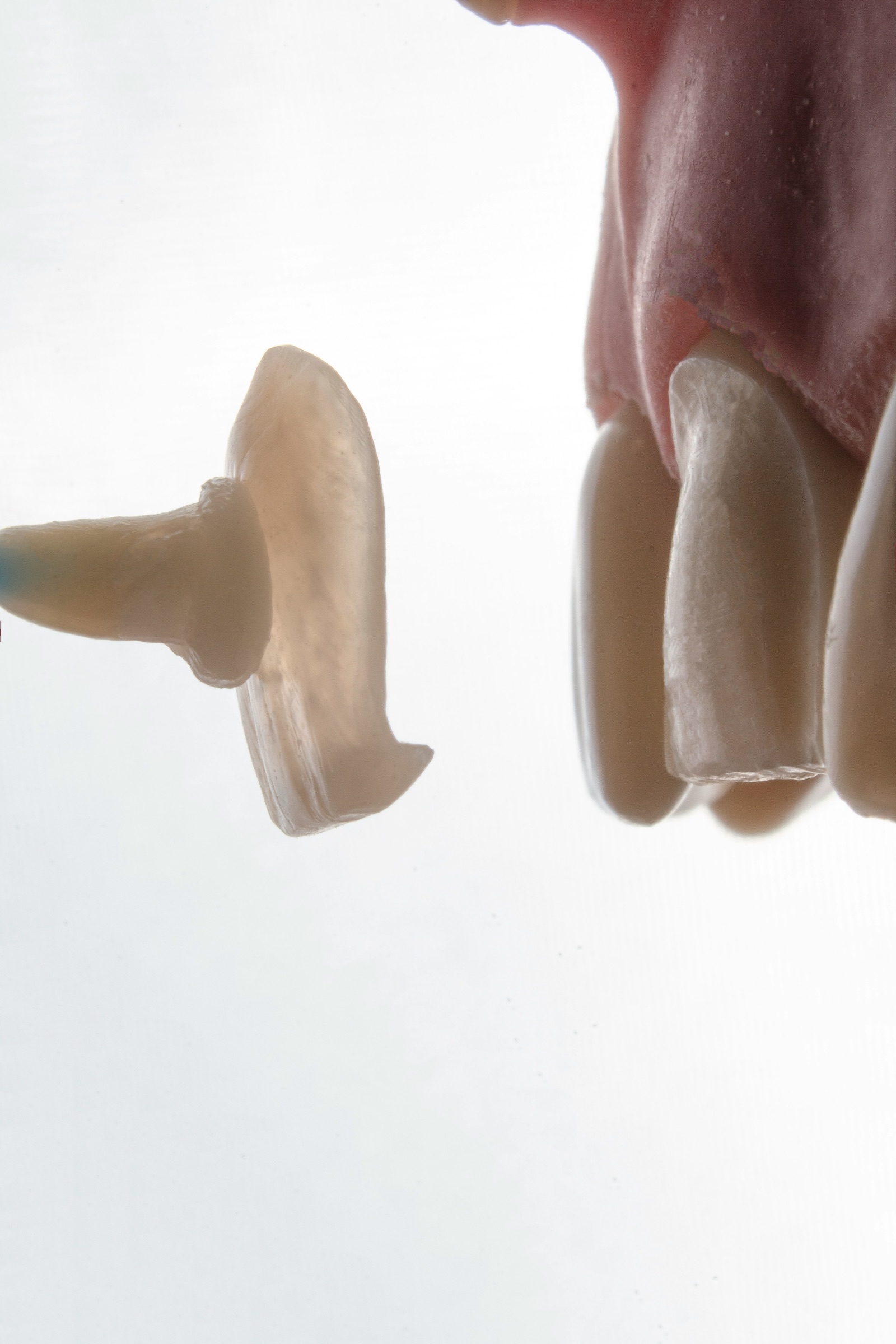
Whitening, bonding, and veneers get grouped together, but each solves a different problem. Understanding what each one does best makes the decision far easier.
Whitening For Colour
If your teeth are healthy and well‑shaped but simply darker than you would like, whitening is usually the right starting point. It lifts staining from coffee, tea, and time without altering the tooth itself, which makes it the most conservative option available.
Whitening does not change shape, close gaps, or repair chips, and it does not lighten existing fillings or crowns. Knowing those limits keeps expectations realistic and helps you decide whether colour is truly the only thing you want to change.
Bonding For Small Repairs
Cosmetic bonding uses a tooth‑colored resin to rebuild chipped edges, close minor gaps, and smooth small imperfections. It is often completed in a single‑visit appointment, with no lab work required, which makes it a popular first step for targeted fixes.
Bonding is a wonderful value when the changes are modest. For larger reshaping across several teeth, however, veneers usually hold their finish longer and give a more uniform result.
Veneers For A Fuller Change
Veneers cover the front surface of a tooth to change its shape, colour, and proportion at once. They are the go‑to when you want to reshape multiple teeth or address stubborn discolouration that whitening cannot lift.
Because veneers are more involved, we reserve them for smiles where the goal genuinely calls for that level of change. At Cambie Dental we walk through composite and porcelain options so you understand the trade‑offs before committing.